Subway Salads vs No Bready Bowls: What’s the Difference?
Hey guys, this is Sam here.
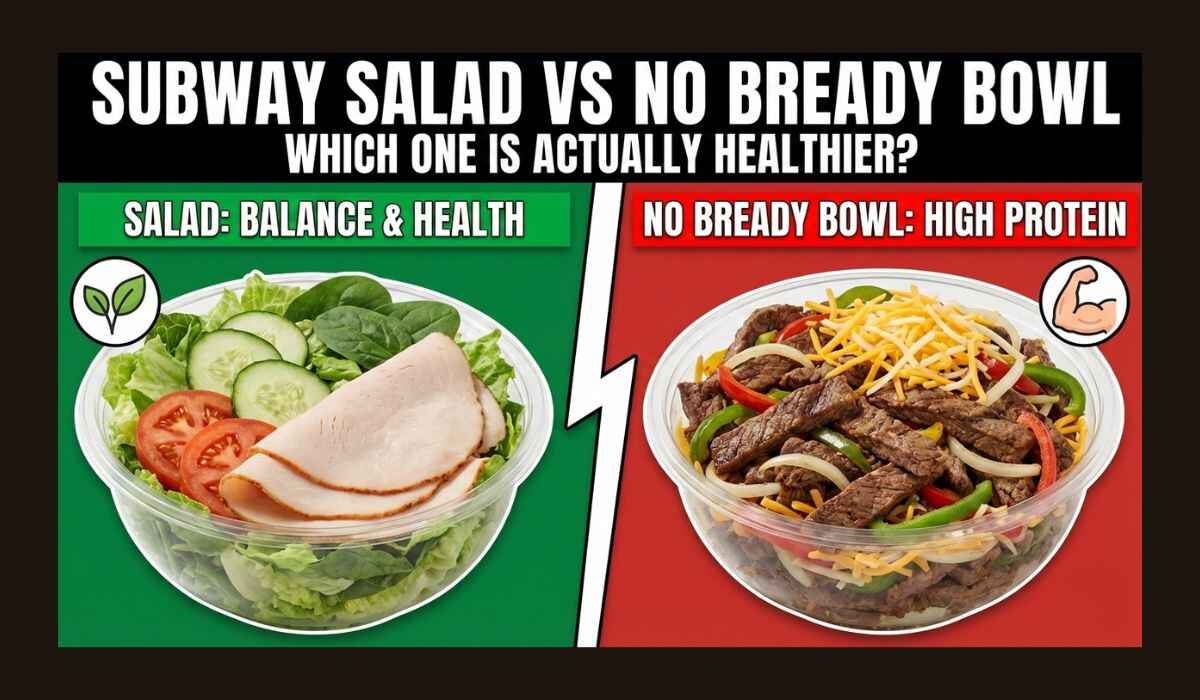
Today, we are going to clear up one of the most confusing things on the Subway menu: Subway salads vs no bready bowls. A lot of people think they’re the same thing, but they’re not. And depending on your health goals, one might be a better choice for you than the other.
Before we jump in, quick note, yes, I’ve been a bit inconsistent lately. Most of my time went into improving the Subway calorie calculator tool, so you guys can make smarter food choices without guessing. Now let’s get back on the topic.
Why does this Comparison even Matter?
Most people choose salads or no bready bowls because they want a healthier option. But here’s the problem:
You cannot judge a meal solely by its calories or protein content.
For example, a bowl can have 45–50 grams of protein, but if it’s extremely high in sodium and saturated fat, it may do more harm than good in the long run.
That’s why, just like with salads, we need to look at:
- Protein quality
- Sodium levels
- Saturated fat
- Added sugars
- Vegetables and micronutrients
So, let’s break this down properly.
What Exactly is a Subway Salad?
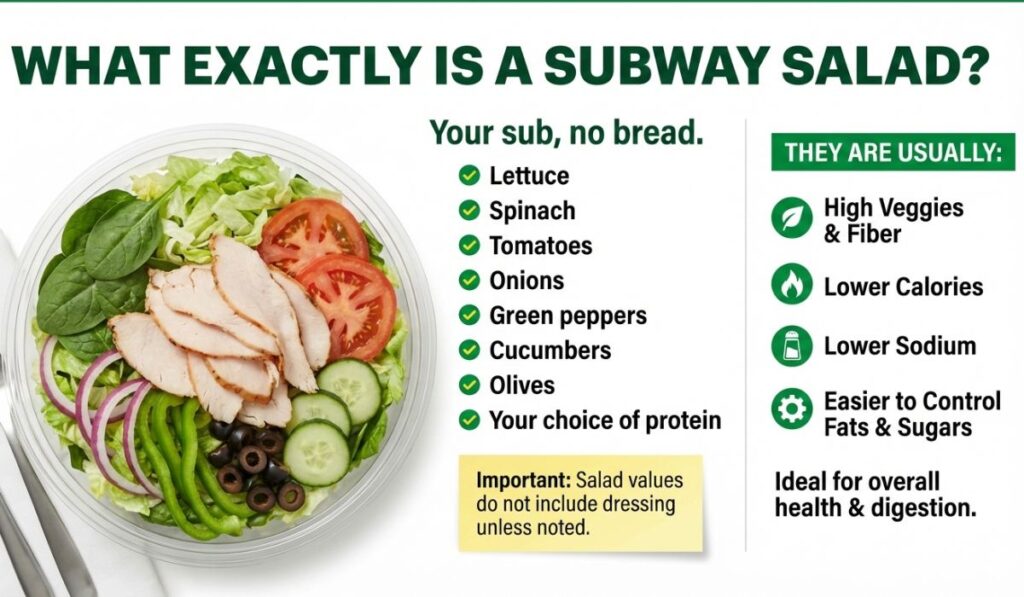
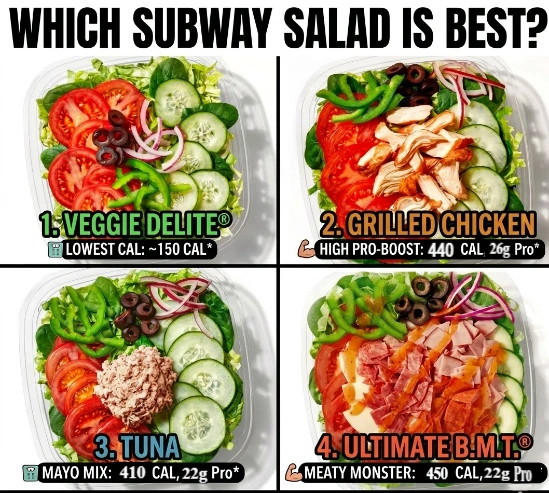
A Subway Salad is basically your sub without the bread.
What it includes:
- Lettuce
- Spinach
- Tomatoes
- Onions
- Green peppers
- Cucumbers
- Olives
- Your choice of protein
Important thing to note: Salad values do not include dressing unless noted.
They are usually:
- Lower in calories
- Lower in sodium (compared to bowls)
- Higher in vegetable volume and fiber
- Easier to control fats and sugars
This makes them ideal if your main goal is overall health, digestion, and micronutrient intake.
What is a No Bready Bowl?
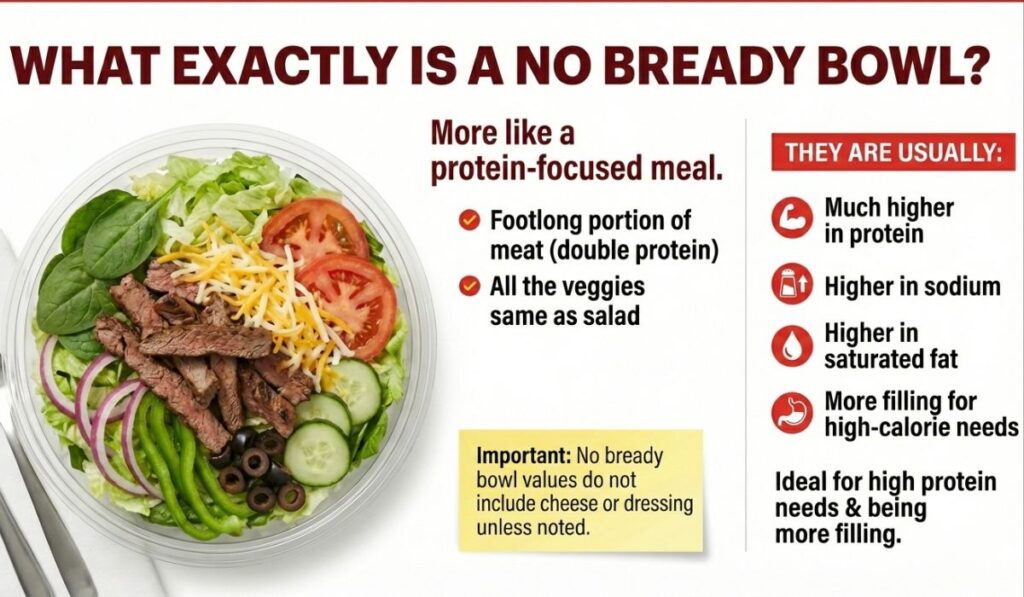
A No Bready Bowl is more like a protein-focused meal.
What it includes:
- Footlong portion of meat (double protein)
- and all the veggies same as salad
Important thing to note: No bready bowl values do not include cheese or dressing unless noted.
Because of the footlong meat portion, no bready bowls are:
- Much higher in protein
- Higher in sodium
- Higher in saturated fat (depending on meat choice)
- More filling for people with high-calorie needs
Key difference: Protein quantity vs balance
This is the most important difference between a Subway salad and a no bready (Protein) bowl:
A protein bowl uses a footlong portion of meat, but without the bread.
So basically, you get:
- Footlong portion of meat
- A footlong portion of vegetables
That’s why protein bowls are much higher in protein, calories, sodium, and saturated fat.
On the other hand, a Subway salad comes with a 6-inch portion of meat, but it still includes a footlong portion of vegetables.
So, in simple terms:
- Protein bowl = footlong meat + footlong veggies
- Salad = 6-inch meat + footlong veggies.
This single portion difference is the main reason why no bready bowls feel heavier and why salads are usually the better option for daily, balanced eating.
Which one is Healthier?
There is no single answer, but here’s a simple way to decide:
Choose a Subway Salad if:
- You want lower sodium.
- You eat at Subway frequently.
- You’re managing blood pressure.
- You want more veggies and fiber.
- You’re aiming for overall long-term health.
Choose a No Bready Bowl if:
- You have high protein needs.
- You’re training hard or bulking.
- You don’t eat high-sodium foods elsewhere in the day.
- You carefully choose lean proteins.
According to the latest dietary guidelines:
- Protein intake should be 1.2–1.6 g per kg of body weight.
- Saturated fat should be under 10% of daily calories.
- Sodium should stay below 2,300 mg per day for adults.
Many no bready bowls can push sodium close to your daily limit in a single meal, especially with processed meats.
You can also:
Order a salad and customize it by adding a footlong portion of lean protein. This gives you the same protein quantity as a protein bowl, but with better control over sodium and saturated fats.
In many cases, this option is also cheaper than ordering a no bready bowl. Plus, you still get a footlong portion of veggies with extra lettuce, which makes the meal more balanced and easier to eat daily.
Final thoughts
Both Subway salads and no bready bowls can be healthy, but only if chosen wisely.
Don’t fall into the trap of thinking:
“More protein automatically means healthier.”
Health is always about balance, not extremes. Your meal should give you enough protein to support your body, while still keeping saturated fat and sodium under control. Added sugars should be avoided as much as possible, and the focus should always be on real foods that naturally provide vitamins and micronutrients.
When you look at it this way, salads usually win as the safest option for daily eating because they are lighter, more balanced, and easier on sodium and fats. However, if your goal is to maximize protein intake once in a while, no bready bowls can still work as long as they are chosen carefully and not eaten every day.